Korean Scalp Care Devices: The Head Spa Trend Taking Over Seoul
Walk through Gangnam's Garosu-gil on any Saturday afternoon, and count the head spa clinics. Five years ago, you'd find two or three. Now there are dozens, sandwiched between coffee shops and skincare boutiques, with waiting lists that stretch weeks out.
Quick Answer
- Industry estimates put Korea's hair-loss-affected population near 10 million — roughly 1 in 5 people
- Korea's domestic home beauty device market more than tripled from ₩500B (2018) to ₩1.6T (2022)
- Clinical study: 655nm LLLT + LED reduced shedding over a 12-week protocol (33 subjects)
- "Skinification" of the scalp is a real Olive Young merchandising push, backed by 1,000+ daily "두피" searches
Disclosure: this article contains affiliate links — we may earn a commission on qualifying purchases at no extra cost to you.
Why Korea Became the World Capital of Scalp Care
Source: KBeautyX
Walk through Gangnam's Garosu-gil on any Saturday afternoon, and count the head spa clinics. Five years ago, you'd find two or three. Now there are dozens, sandwiched between coffee shops and skincare boutiques, with waiting lists that stretch weeks out.
This didn't happen by accident. Korea has a hair loss problem that dwarfs most countries on a per-capita basis. There's no single official government count — the National Health Insurance Service only tracks people who sought hospital treatment (about 230,000 in 2020) — but industry estimates compiled in U.S. trade data put the affected population near 10 million, including people managing the condition on their own, or roughly one in five Koreans.
A market analysis from the Korea Institute of Science and Technology Information (KISTI) tracked the domestic hair-loss-relief cosmetics market growing from ₩338.3 billion in 2021 to a projected ₩499 billion by 2025 — a compound growth rate of roughly 10% a year.
But the real story isn't just hair loss treatment. It's a cultural shift Korean beauty insiders call "스키니피케이션" (skinification).
The logic is straightforward: the scalp is skin. It has pores, produces sebum, accumulates dead cells, and responds to inflammation — so why wouldn't you use dedicated devices on it?
Olive Young, Korea's dominant beauty retailer, runs a dedicated "두피" (scalp) exhibition page advertising that the term is searched more than 1,000 times a day on its platform, stocking everything from scalp scaling treatments to LED scalp devices alongside traditional shampoos. Trade press has covered the retailer's broader "skinification" push — treating scalp and body care with the same rigor as facial skincare — as one of the clearer signals of where Korean beauty retail is headed.
The Science Behind Korean Scalp Devices
How Low-Level Light Therapy Works on the Scalp
The clinical evidence for light-based scalp treatment comes from Korean research institutions, not just marketing departments. A study published in the Journal of the Korean Society of Cosmetics (대한화장품학회지, 2022, Vol. 48 No. 3) investigated the effects of combined phototherapy using LLLT at 655nm and LED at 625±5nm and 850±10nm.
The study enrolled 33 subjects who used the LLLT + LED device for 10 minutes daily over 12 weeks. The results were clear across multiple measurement parameters:
- Scalp redness: Significant reduction, indicating decreased inflammation
- Scalp elasticity: Measurable improvement in dermal firmness
- Moisture content: Increased hydration levels in the scalp dermis
- Hair luster: Visible improvement in light reflection and shine
- Tensile strength: Stronger individual hair strands
- Hair shedding count: Reduced daily hair loss numbers
No adverse skin reactions were reported throughout the 12-week trial period. The researchers concluded that combined LLLT and LED phototherapy is "an effective therapy for improving hair loss and scalp conditions."
This matters because it separates legitimate devices from gimmicks. The 655nm wavelength specifically targets mitochondrial cytochrome c oxidase in dermal papilla cells — the cells responsible for hair follicle growth cycles. Red light at this wavelength increases ATP production, which translates to more cellular energy available for the anagen (growth) phase of hair cycling.
The evidence base isn't just Korean, either. A sham-controlled randomized trial published in Lasers in Surgery and Medicine (Lanzafame et al., 2014) tested a 655nm laser helmet on 47 women with androgenetic alopecia, self-administered every other day for 25 minutes over the study period, and found statistically significant hair count increases in the treatment group compared to sham. It's one trial, not a settled consensus — but it's a real, peer-reviewed data point behind the wavelength Korean device makers standardized on.
Galvanic and Microcurrent Technology for the Scalp
Beyond light therapy, Korean head spa devices increasingly incorporate galvanic current technology. The principle is identical to facial galvanic devices: electrical current drives ionic ingredients deeper into the scalp dermis through iontophoresis.
Professional head spa systems use ion-based technology to enhance product penetration, combining low-frequency pads, air brushes, scalp treatment wands, and silver nano wands. A pharmaceutical sciences review on transdermal iontophoretic delivery describes how a low-level electrical current can meaningfully increase absorption of charged active ingredients compared to passive topical application — the same underlying mechanism galvanic facial devices rely on, applied to the scalp.
For scalp treatments specifically, this means hair growth peptides, caffeine complexes, and anti-inflammatory botanicals can reach the dermal papilla rather than sitting on the scalp surface where they're washed away at the next shampoo.
The Pulsating Water Jet Approach
One category of Korean head spa devices takes a completely different approach: pulsating water jets instead of light or current. Devices like the IDEX Head Spa Water Punch and HydroPulse Pro use rhythmic, needle-like water pulses rather than a steady stream. The mechanical action targets three specific scalp problems:
- Excess sebum removal: Forceful water jets dislodge oxidized sebum plugging follicular openings
- Demodex mite reduction: Mechanical flushing may help clear Demodex folliculorum mites that contribute to follicular inflammation — a systematic review of Demodex-associated inflammatory skin conditions covers the evidence for treating mite overgrowth generally, though it doesn't test water-jet devices specifically
- Dead cell scaling: Accumulated corneocytes on the scalp surface are mechanically displaced without the irritation of chemical exfoliants
The water pressure is adjustable, which matters more than most people realize. Too little pressure provides minimal cleansing. Too much can traumatize already-inflamed follicles, and Korean head spa practitioners calibrate pressure based on a preliminary scalp camera analysis.
Korean Head Spa Device Categories: A Complete Breakdown
Professional Salon Systems (₩2,000,000+)
HeadSpa K
HeadSpa K is a nationwide Korean franchise brand built around customized scalp diagnosis and treatment programs — scalp scaling, deep-cleansing care, hair loss treatment, and repair clinics delivered by trained staff at its branch network. It's a real, established brand in the space, but exact device specs and per-session pricing aren't published, so treat any specific "5-in-1" feature list or price you see quoted online with caution — verify with the branch directly before booking.
Takara Belmont "Yume" Head Spa System
Yume is a Japanese-made professional head spa unit from Takara Belmont, not a Korean product — it shows up in this category because premium Korean salons import and use it. Its distinguishing feature is ergonomic comfort: a full-recline chair, motorized lift, and multi-point head cushioning built to maintain stability through extended treatment sessions. Specific salon adoption and pricing vary by location; Takara Belmont doesn't publish a standard Korean session rate.
Airapha "Dohi Spa" Circulation System
Airapha is a real Korean manufacturer, and the Dohi Spa line is a closed-water-circulation head spa unit built for salon shampoo therapy — a waterfall-style basin attachment with a 5-minute therapy cycle combining water circulation with scalp massage. It's popular in mid-range Korean hair salons that want to offer head spa services without dedicating a full treatment room to longer protocols. Airapha also sells consumer versions directly through Amazon.
Home-Use LED and Laser Devices (₩300,000–₩800,000)
This is where the Korean market has exploded. Home-use scalp devices now incorporate the same core technologies found in professional equipment, just at lower intensities suitable for daily unsupervised use.
Key features to look for in Korean home scalp devices:
| Feature | What It Does | Why It Matters |
|---|---|---|
| Red LED (620-660nm) | Stimulates hair follicle cells | Increases growth-phase duration |
| Near-IR (830-850nm) | Penetrates to dermal papilla | Anti-inflammatory, deeper penetration |
| LLLT Laser (655nm) | Targeted photobiomodulation | Highest clinical evidence for hair growth |
| Galvanic current | Drives serums into scalp | Iontophoresis-enhanced absorption |
| EMS/Microcurrent | Stimulates scalp muscles | Improves blood circulation |
| Vibration massage | Mechanical scalp stimulation | Loosens sebum, promotes relaxation |
The Kumho Raycure Cap, made in Korea, is one real example in this LED/laser cap category — worn as a helmet-style device rather than handheld.
For the galvanic/iontophoresis category, Vanav's Time Machine Golden Brush is a Korean-made scalp device combining a titanium brush head with galvanic ion massage and micro-vibration — Vanav (a Doctors Tech Co. subsidiary) is one of the more established Korean at-home device brands.
Budget Scalp Massagers (Under ₩100,000)
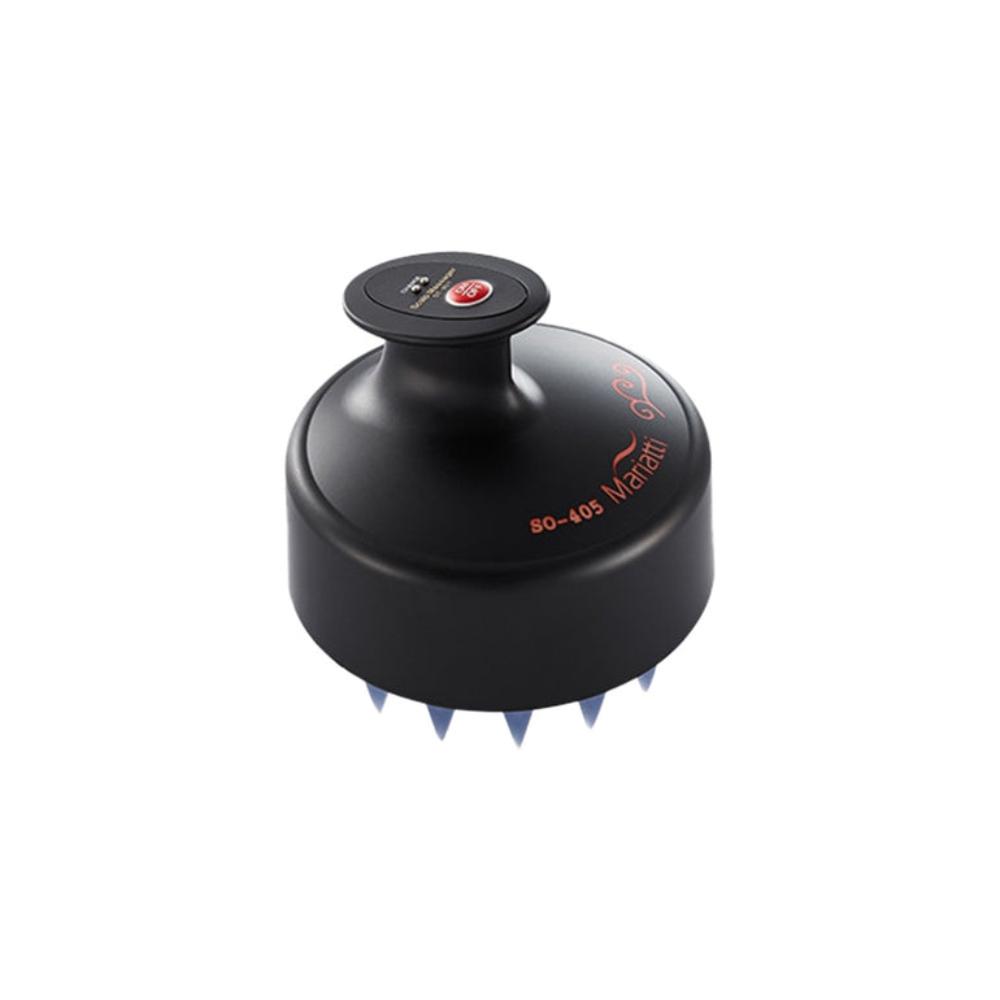
Electric scalp massagers with basic vibration and kneading functions dominate platforms like Coupang and Naver Shopping. While they lack the phototherapy and galvanic functions of premium devices, they serve the entry-level market — consumers who want to start a scalp care routine without significant investment. Dr. Groot's Premium Scalp Cleansing Brush — from the Korean hair-care brand now owned by LG — is a real, currently-sold example of this entry-level, cleansing-focused category.
These devices typically feature silicone tips that replicate the finger pressure patterns of professional scalp massage. Korean users on Naver Blog frequently note that even basic mechanical massage improves the subjective experience of scalp tightness and tension headaches, even if the clinical evidence for hair growth stimulation is limited compared to light-based devices.
The Korean Head Spa Experience: What Actually Happens
A Typical 90-Minute Seoul Head Spa Session
Understanding what happens in a professional Korean head spa helps contextualize why home devices are designed the way they are. A typical premium session follows this protocol:
Step 1 — Scalp Analysis (10 minutes) A high-magnification scalp camera examines follicular density, sebum levels, scalp redness, and dead cell accumulation across multiple zones. The practitioner maps problem areas and customizes the treatment plan.
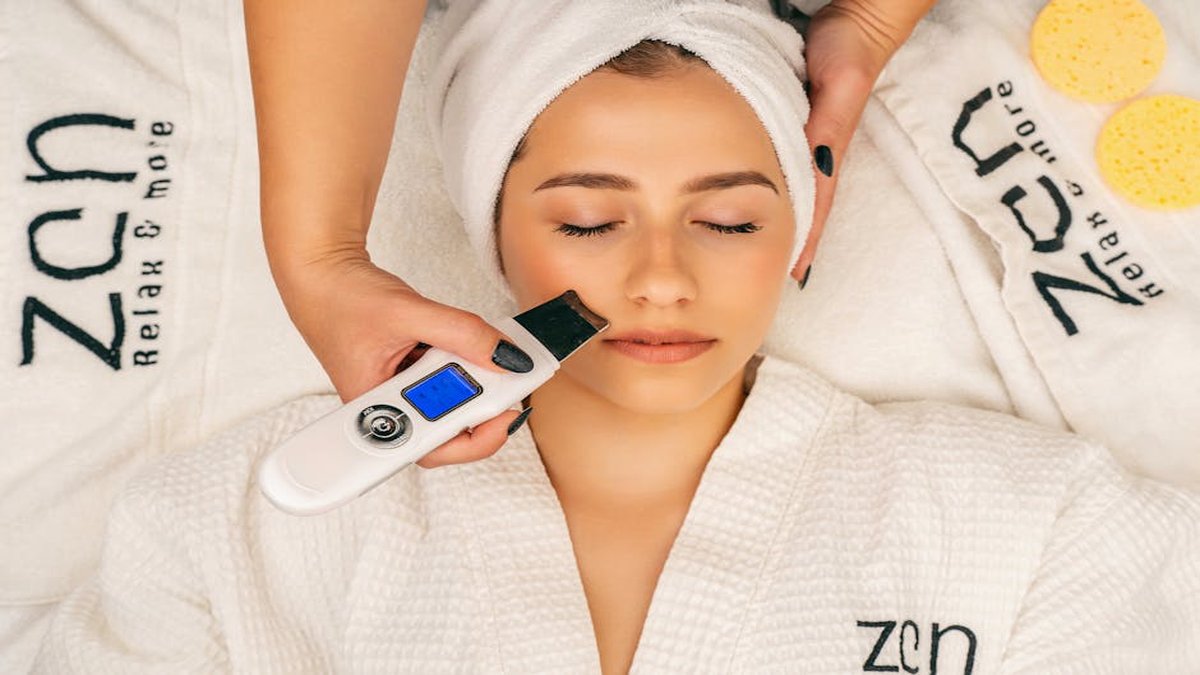
Step 2 — Deep Cleansing (15 minutes) Enzyme-based or AHA/BHA scalp scaling products are applied. Some clinics use ultrasonic devices to enhance the scaling process. The pulsating water jet system then flushes loosened debris.
Step 3 — Galvanic Treatment (15 minutes) Growth-factor serums or anti-inflammatory ampoules are applied, and the galvanic device drives them into the scalp dermis. The practitioner works section by section, ensuring full coverage.
Step 4 — LED/LLLT Therapy (10-15 minutes) A scalp-specific LED dome or handheld device provides phototherapy at therapeutic wavelengths. Red and near-infrared dominate for anti-aging and growth stimulation. Blue may be added for antibacterial effects in cases of seborrheic dermatitis.
Step 5 — Massage and Cool-Down (20-25 minutes) Manual scalp massage combined with cooling mist application. This is the relaxation-focused portion — the step that turns a clinical treatment into the "spa" experience that keeps clients rebooking.
Step 6 — Finishing Treatment (10 minutes) Lightweight leave-in scalp essence or tonic. Final scalp camera images for before/after comparison.
The price for this full protocol at a premium Seoul head spa runs ₩150,000 to ₩350,000 per session. At twice-monthly visits, that's ₩3.6–₩8.4 million annually, which is precisely why the home device market took off.
Who's Driving the Korean Scalp Device Boom
The 2030 Generation: Prevention Over Treatment
Korean beauty media consistently identifies the 20s-30s demographic as the fastest-growing segment for scalp care products and devices — the same cohort driving the broader tripling of Korea's home beauty device market described above, and the group most visible in Olive Young's "두피" search volume and skinification merchandising.
This generation's approach is fundamentally different from their parents'. They're not waiting for hair loss to start before investing in scalp health. They treat it preventively — the same way they apply SPF before sun damage occurs.
Korean beauty forums (화해, Hwahae) show 2030 consumers rating scalp products using the same rigorous criteria they apply to facial serums: ingredient lists, clinical evidence, texture, and absorption.
The 40+ Demographic: Treatment and Restoration
For the 40+ demographic, scalp devices serve a more targeted purpose. This group has already begun experiencing visible thinning, receding hairlines, or overall density reduction. Trade press coverage of Korea's broader beauty device market consistently notes that TV home shopping is a channel where older, treatment-motivated buyers over-index compared to younger, prevention-focused shoppers — a pattern that holds for scalp devices specifically, though there isn't a scalp-specific study to point to for exact numbers on which wavelength technology this group prefers.
Men: An Unexpected Growth Segment
Home shopping data offers a concrete, if narrow, data point here: a Financial News report on GS Shop's sales of a home beauty device (the Dual Sonic Maximum) found men in their 40s made up 12% of buyers — more than double the 5% share from women in their 30s, an unusual skew for a beauty device sold on a channel that otherwise leans heavily toward women in their 40s-60s. That's one retailer's data for one device, not a scalp-device-specific market study, but it lines up with what's visible anecdotally: hair loss affects men more visibly and earlier, and Korea's men's grooming culture — already the most developed in Asia — has expanded to include scalp devices as a normal part of a grooming routine, without the stigma that still attaches to men buying facial beauty devices.
Building a Home Scalp Care Routine with Korean Devices
The Three-Device Approach
Korean scalp care influencers and trichologists (모발 전문의) generally recommend a three-device approach for comprehensive home scalp management:
Device 1: Scalp Scaling/Cleansing Device Used 1-2 times per week before shampooing. Ultrasonic or vibration-based devices that loosen dead cells, oxidized sebum, and product buildup. Think of it as the "double cleanse" step for your scalp.
Device 2: LED/LLLT Therapy Device Used 3-5 times per week for 10-15 minutes. This is the core treatment device that provides photobiomodulation to stimulate hair follicle activity and reduce scalp inflammation.
Device 3: Galvanic/Iontophoresis Device Used 1-2 times per week with scalp serums or ampoules. Drives active ingredients deep into the scalp dermis for enhanced efficacy.
Product Pairing Recommendations
Korean head spa professionals emphasize that the device is only half the equation. The scalp products used in conjunction matter equally:
- With cleansing devices: Enzyme-based scalp scrubs or salicylic acid scalp treatments
- With LED devices: Lightweight, non-greasy scalp tonics (heavy oils can interfere with light penetration)
- With galvanic devices: Ionic scalp serums containing peptides, niacinamide, or caffeine (ionic formulations respond to galvanic current)
For a deeper dive into ingredient-device pairing principles, see our serum and device ingredient pairing guide.
Korean Scalp Device Market: Where It's Heading
AI-Powered Scalp Diagnostics
The next wave of Korean scalp devices integrates AI-based scalp analysis directly into the device. Instead of visiting a professional for scalp camera analysis, consumers use a device-connected smartphone app that photographs scalp sections, analyzes follicular density and sebum levels using machine learning, and recommends treatment parameters automatically.
This aligns with the broader Korean beauty tech trend. Citing LG Economic Research Institute data, Korean trade press reported that the domestic home beauty device market grew from ₩500 billion in 2018 to ₩1.6 trillion by 2022 — more than tripling in four years — and is expected to keep growing at over 10% annually through 2030. Scalp devices are a slice of that broader category, not a separately tracked figure, but they're riding the same growth curve. AI integration is expected to accelerate this further by lowering the expertise barrier for effective home treatment.
Convergence Devices
Korean manufacturers are increasingly building convergence devices that combine scalp care with facial care functions. A single device might offer facial LED modes, galvanic facial treatment, AND scalp LED therapy — switching between attachments. This appeals to the price-sensitive consumer who wants multi-function capability without buying three separate devices.
Regulatory Attention
As the scalp device market grows, Korea's MFDS (식품의약품안전처) has increased scrutiny. As a general matter of Korean medical device regulation, devices making explicit hair regrowth claims are held to a stricter evidentiary and classification standard than devices marketed only for general "scalp health" or cleansing — the same distinction that governs facial LED devices marketed for wrinkles versus general skin care. Korean consumers shopping for scalp devices should verify how a specific product is classified before trusting a regrowth claim — a topic we cover extensively in our MFDS regulations guide.
How Korean Scalp Devices Compare to Facial Beauty Devices
If you're already familiar with Korean facial beauty devices, scalp devices follow similar technological principles with key adaptations:
| Factor | Facial Devices | Scalp Devices |
|---|---|---|
| LED wavelengths | Red, blue, NIR | Same, plus 655nm laser for follicle targeting |
| Galvanic use | Serum absorption, cleansing | Same, through hair — requires parting |
| Session frequency | Daily to 3x/week | Daily for LED, 1-2x/week for galvanic |
| Contact method | Full-face mask or handheld | Comb-type, dome, or handheld wand |
| Primary concern | Aging, acne, tone | Hair loss prevention, scalp inflammation |
| Price range | ₩100K–₩2M+ | ₩50K–₩800K for home; ₩2M+ for professional |
For those building a complete Korean beauty device routine that includes both facial and scalp care, our home device routine protocols guide outlines how to sequence treatments effectively.
Frequently Asked Questions
Can Korean scalp devices actually regrow hair, or do they just improve scalp health?
Clinical evidence published in Korea distinguishes between these two outcomes. LED and LLLT devices at therapeutic wavelengths (particularly 655nm) have demonstrated measurable improvements in hair density and reduced shedding in controlled studies. However, results depend heavily on the stage of hair loss — devices are most effective for early-stage thinning and prevention. Advanced androgenetic alopecia with fully miniaturized follicles is unlikely to respond to light therapy alone. Korean dermatologists position scalp devices as part of a comprehensive approach that may include topical treatments like minoxidil, not as standalone solutions.
How often should I use a home scalp LED device for results?
The Korean clinical study published in 대한화장품학회지 used a protocol of 10 minutes daily for 12 weeks and achieved statistically significant improvements. Most Korean scalp device manufacturers recommend similar daily use at 10-15 minutes per session. Consistency matters more than session length — using a device for 10 minutes daily will outperform 30-minute sessions done sporadically. The 12-week timeline for visible results aligns with the hair growth cycle, as hair in the telogen (resting) phase needs approximately 3 months to transition back to anagen (growth).
Are professional Korean head spa treatments worth the cost compared to home devices?
Professional treatments offer two advantages home devices cannot replicate: expert scalp analysis with clinical-grade cameras, and higher-intensity device output that produces faster results. A single professional session (₩150,000–₩350,000) can achieve what might take weeks of home treatment. However, the cumulative cost of regular professional sessions (₩3.6–₩8.4 million annually for twice-monthly visits) far exceeds the one-time investment in home devices (₩300,000–₩800,000). The Korean consensus approach combines both: monthly professional sessions for deep treatment, supplemented by daily home device use for maintenance.
Is the scalp "skinification" trend backed by science, or is it just marketing?
The underlying science is sound. The scalp is skin — it has the same cellular structure, the same inflammatory pathways, and responds to the same photobiomodulation principles as facial skin. Korean research confirms that LED wavelengths effective for facial skin (red, NIR) produce measurable benefits on the scalp, including reduced inflammation and improved hydration. Where skepticism is warranted is in marketing claims that overextend the evidence — not every facial skincare ingredient or technology translates equally to the scalp environment, which has different sebum production, pH levels, and microbial communities.
Which Korean scalp device technology is best for seborrheic dermatitis?
Korean dermatologists treating seborrheic dermatitis with home devices typically recommend blue LED therapy (405-415nm) for its antibacterial and anti-fungal properties, combined with regular scalp scaling using ultrasonic cleansing devices. The blue wavelength targets Malassezia yeast overgrowth, a primary driver of seborrheic dermatitis. Galvanic devices can enhance the delivery of anti-fungal scalp treatments like zinc pyrithione or ketoconazole-based serums. However, active flare-ups should be evaluated by a dermatologist before beginning device-based treatment — some inflammatory conditions can worsen with mechanical or thermal stimulation.
Related Reading
- RF vs LED vs Microcurrent: Korean Device Technology Comparison
- Korean Beauty Device Safety: MFDS Regulations Guide
- Korean Home Device Routine Protocols
This article is educational and does not constitute medical advice. Consult a licensed dermatologist about any hair loss or scalp condition.
— The Device Lab Team